Sr. Judith Desmaris, SP, first learned to sign for the deaf when some volunteers at the Washington School for the Deaf said they needed help to teach religion to children.
Her signing was only rudimentary at first – spelling out each letter in a word. After taking interpreter training, she ministered with deaf people for the Seattle and Portland Archdioceses. But her ministry grew over time. It became such a part of her life that when she moved to Montreal as part of the leadership team, she interpreted at Sunday Mass once per month for English signing deaf people. She also spent time with the Sisters of Dolors, who are deaf.
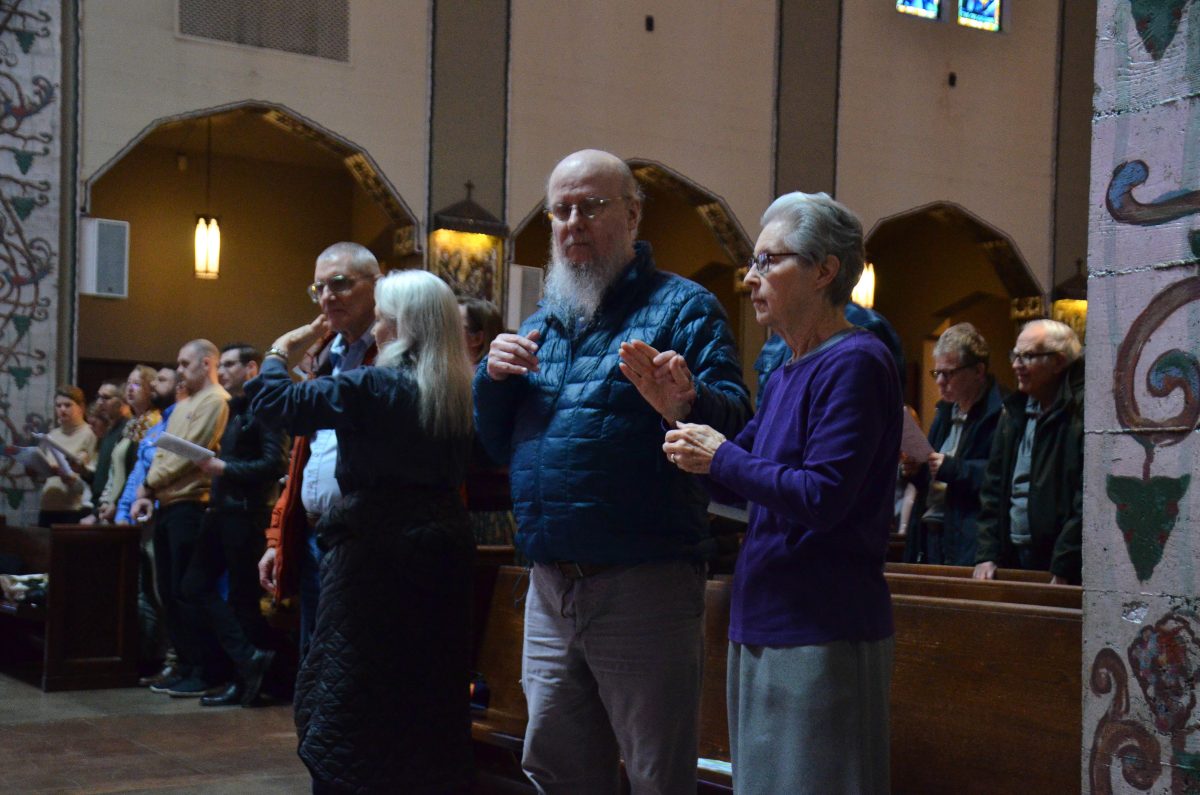
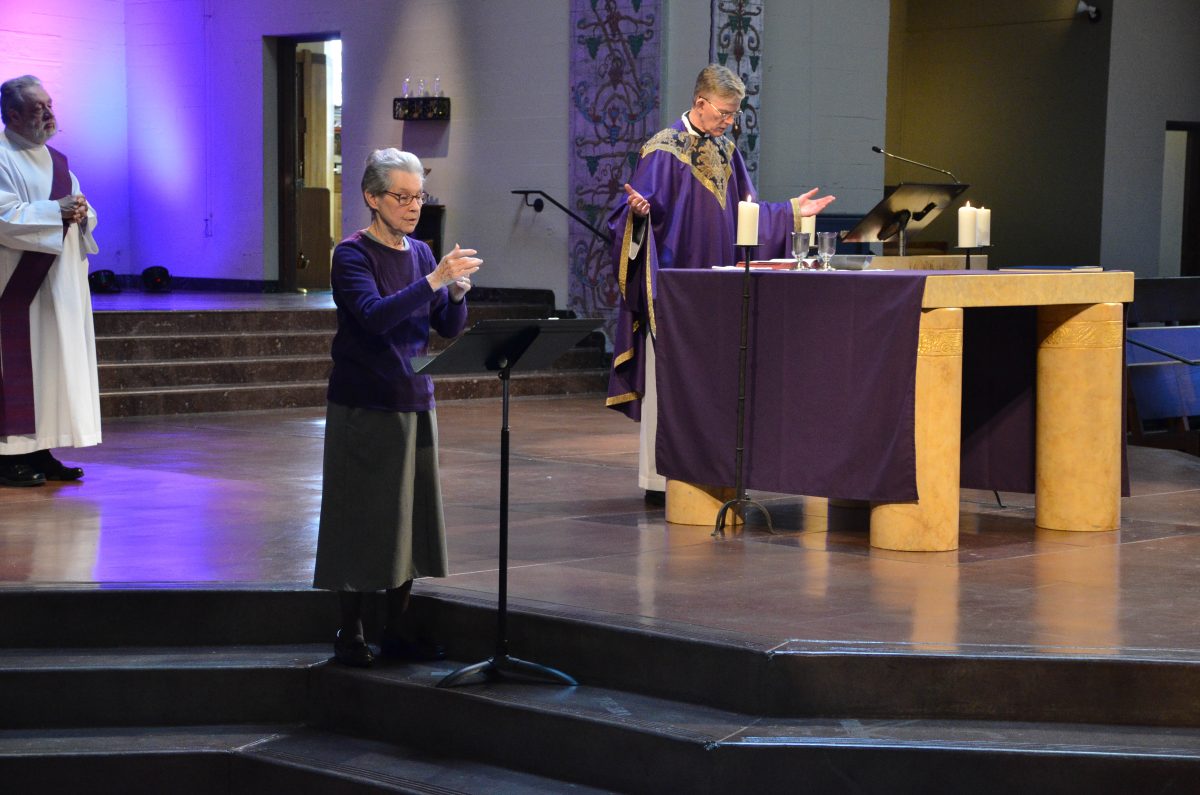
Today, she interprets on a regular basis at Mass at St. Joseph’s in Seattle and visits some people where they live.
The art of translating, whether spoken or sign language, is draining so interpreters try to work in teams. On a recent Sunday morning, during the first part of the Mass, Sr. Judith interpreted for a gentleman who was both deaf and blind. Afterward, she switched with the other interpreter and signed for the congregation.
The work of interpreters allows for everyone to fully participate in the liturgy. Deaf and blind congregants respond with the rest of the faithful through sign language and are fully engaged with the community.
St. Judith’s work echoes the early days of the Congregation. Just a few short years after the founding of the Sisters of Providence, Sr. Marie de Bonsecours took an interest in teaching deaf children in Montreal. Blessed Emilie Gamelin took notice and formalized the ministry which eventually resulted in the opening of a school for deaf girls. It was the last ministry Blessed Emilie initiated before her death.
Many Sisters, no matter what other ministries they are involved in, are active in parish communities. Sisters participate in choirs, food programs, lectoring, small faith groups, teaching children and adults, Eucharistic ministry, visiting the sick and much more.
Wherever there is need, Sisters step up to help.